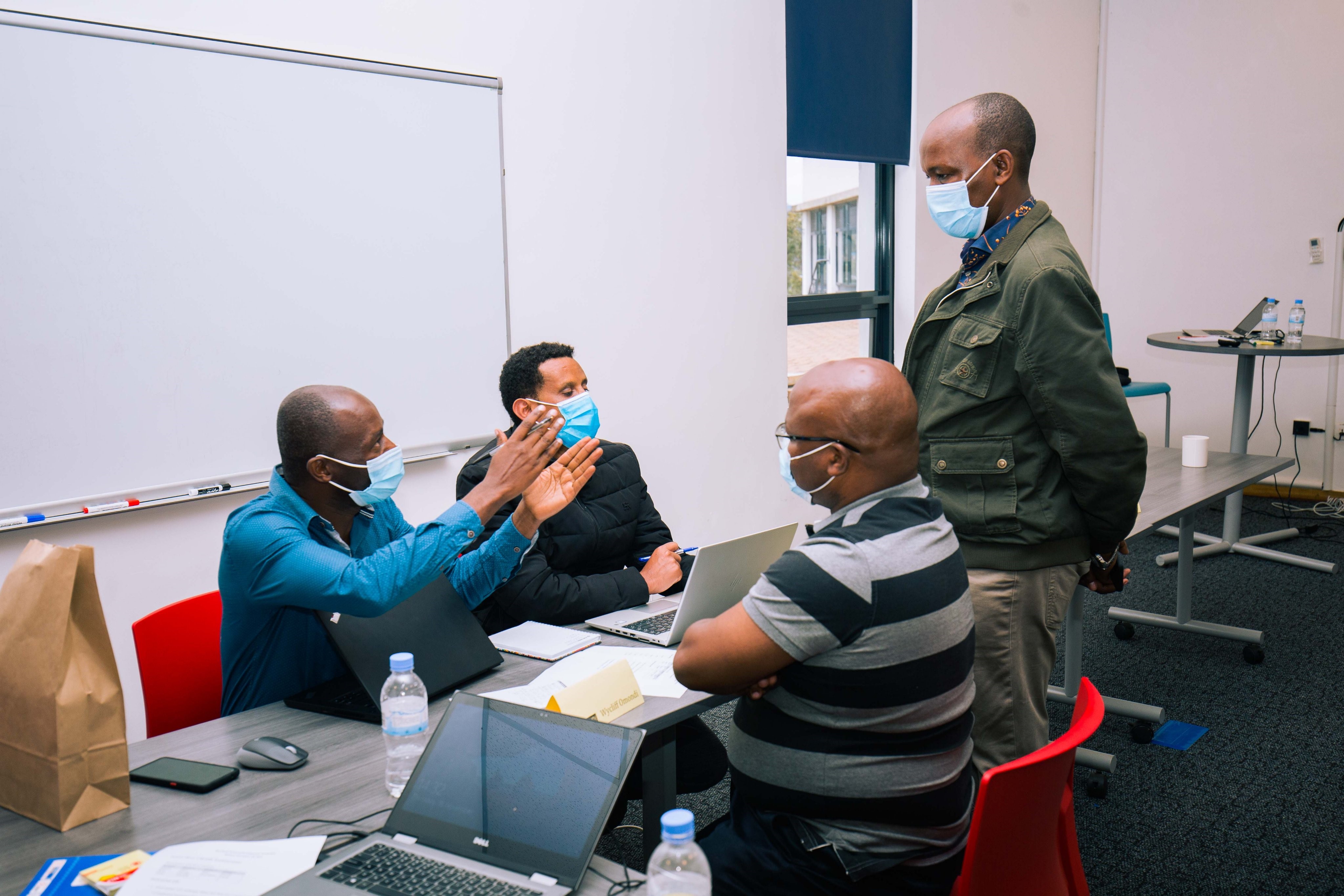
Inclusive Growth and Leaving No One Behind : Equity in Rwanda’s Vision 2050- The Role of Organizational Development in Policy Implementation and Equity Outcomes
Abstract
Purpose : Rwanda has recorded strong post-conflict recovery and sustained inclusive growth under Vision 2050 and NST, yet persistent inequalities across regions and social groups indicate that policy strength alone does not guarantee equitable outcomes. This study examines how Organizational Development (OD) influences the effectiveness of inclusive growth policies in Rwanda, focusing on social protection, gender equality, and inclusive education. Design/methodology/approach : A desk-based mixed-methods design was used, combining qualitative policy and institutional analysis with quantitative secondary data. Key datasets include EICV7, RDHS (2025), LFS, Imihigo, Citizen Report Cards (CRC), and the Rwanda Governance Scorecard (RGS), alongside national policies (Vision 2050, NST2) and peer-reviewed literature. The analysis is guided by an integrated framework combining Organizational Development Theory, Sen’s Capability Approach,
and Policy Implementation Theory to assess how institutional capacity, coordination, and learning systems mediate equity outcomes.
Findings : Rwanda shows substantial progress in poverty reduction and human development, with poverty declining from 39.8% (2017) to 27.4% (2024), extreme poverty falling from 11.3% to 5.4%, and child stunting reducing from 33% (2020) to 27% (2025). Governance performance is also strong, particularly in participation and accountability. However, persistent rural–urban and demographic inequalities indicate uneven distribution of these gains. Evidence suggests that inequality is driven less by policy design and more by implementation constraints, including uneven institutional capacity, coordination gaps, limited adaptive learning, and inconsistent service delivery. OD therefore emerges as the critical mediating factor between inclusive policy intent and equitable outcomes.
Practical implications : Achieving Vision 2050 equity targets requires shifting from policy formulation to implementation excellence through OD. Priorities include strengthening institutional capacity diagnostics and leadership support ; enhancing data-driven planning using EICV7, RDHS, LFS, and equity dashboards ; improving service delivery systems and citizen feedback mechanisms ; advancing inclusive economic transformation through strengthened VUP graduation pathways, skills to employment linkages, and targeted youth and women employment ; reducing spatial inequalities through integrated area-based development ; and harmonizing accountability systems (Imihigo, RGS, CRC) alongside strengthened multi-stakeholder partnerships and blended financing.
Originality/value : This study advances equity and governance literature by integrating Organizational Development Theory, Sen’s Capability Approach, and Policy Implementation Theory into a unified explanatory framework. It demonstrates that organizational capacity and implementation systems are central mediators between strong policy frameworks and equitable development outcomes, offering both theoretical and practical insights applicable to Rwanda and comparable development contexts.
Keywords : Inclusive growth ; Organizational Development ; Policy implementation ; Capability Approach ; Social protection ; Inequality ; Rwanda ; Vision 2050 ; Governance systems ; Equity outcomes
Doc 1Recent post
-
-

-

-
-

6th Annual General Assembly
Oct 4, 2022 -
-
-
PRESS RELEASE
Jun 10, 2022 -
-