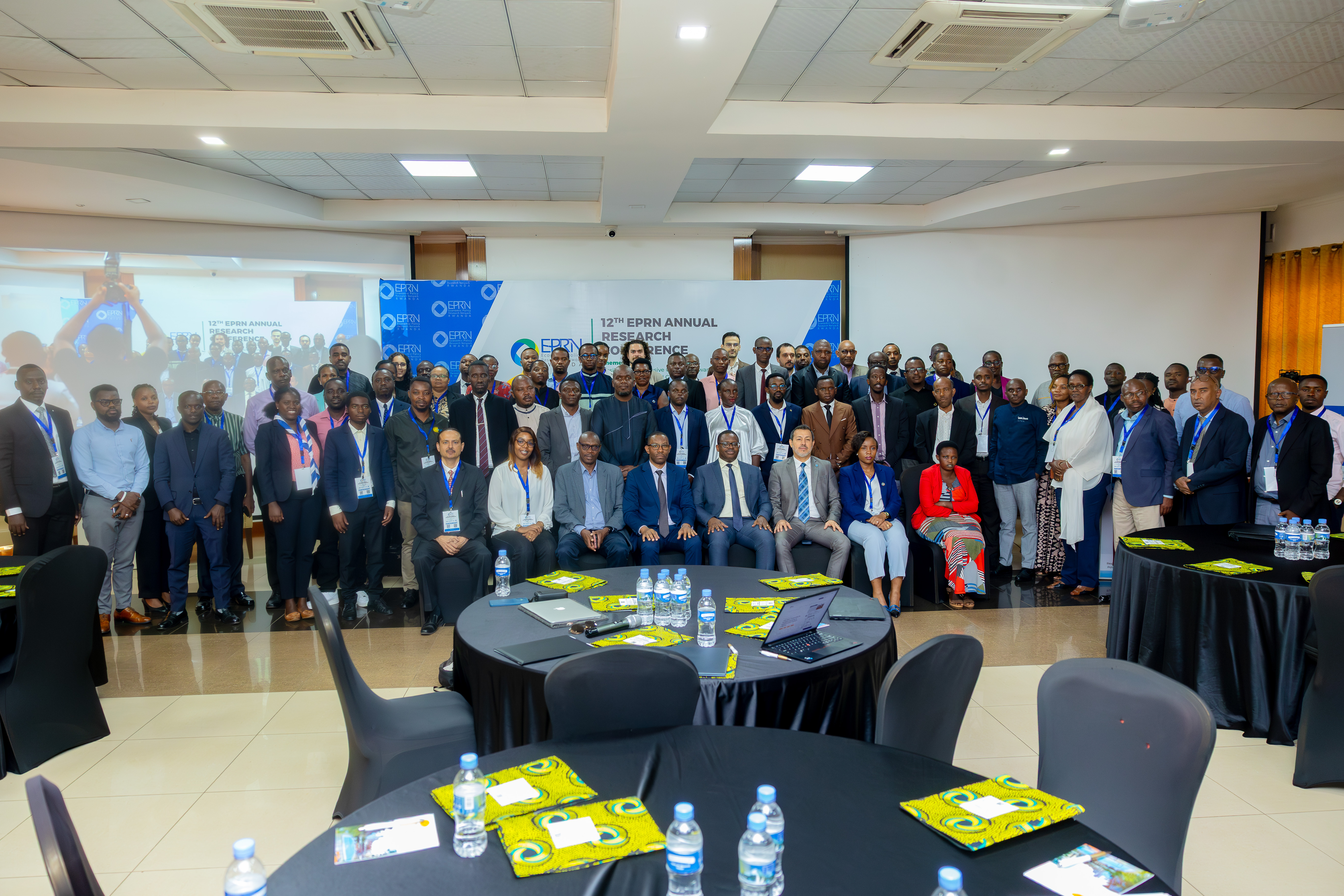
12TH EPRN ANNUAL ECONOMIC RESEARCH CONFERENCE

LEMIGO HOTEL KIGALI , JUNE 25TH- 26TH, 2026
Executive Summary
Rwanda entered 2026 with strong economic momentum, recording 9.4% GDP growth in 2025, driven by services (52%), industry (22%), and agriculture (20%). Despite this robust performance, challenges persist—headline inflation remained high at 12.9% in May 2026, youth unemployment continues to pressure the labor market, and external shocks threaten fiscal stability. The government’s fiscal consolidation efforts, supported by the IMF’s Extended Credit Facility, have narrowed the balance of payments deficit and strengthened export diversification, notably in coffee, tea, and minerals.
Against this backdrop, the 12th Annual Economic Research Conference, convened by the Economic Policy Research Network (EPRN) on June 25–26, 2026, brought together over 350 stakeholders from government, academia, civil society, the private sector, and development partners. The conference was co-organised by FAO, ICTD, UNDP, and UNDECA.
Its central theme was “Resilient and Inclusive Growth in Rwanda : Policy Pathways Amid Global Uncertainty”, which was explored through four interconnected pillars :
-
Agriculture and Food Systems Transformation :
Evidence highlighted the need to repurpose agricultural budgets using tools such as FAO’s PolOpT and to institutionalise the Rwanda Food Systems Dashboard. These measures would help reduce post-harvest losses, diversify exports, and embed nutrition into agricultural planning. -
Tax Administration and Fiscal Resilience :
Rwanda’s VAT gap, estimated at RWF 2 trillion in 2023, underscores the urgency of modernising tax administration. Data-driven compliance, regulation of tax advisors, and balanced revenue mobilisation were emphasised as ways to expand fiscal space without stifling SMEs. -
Regional Integration Amid Global Shocks :
With Eastern Africa averaging 5.7% growth in 2026, Rwanda must deepen intra-EAC trade, diversify exports beyond minerals, and adopt innovative financing instruments such as green bonds and diaspora bonds to sustain growth under tightening fiscal conditions. -
Youth Employment Ecosystems :
Evidence from the AGUKA Tracer Study (2022–2025) showed that youth enterprises created over 128,000 jobs but remain vulnerable due to informality and limited access to finance. Expanding financial literacy, tailored loan products, and entrepreneurship hubs is critical to harness Rwanda’s demographic dividend.
The conference produced the following action-oriented recommendations :
- Scale climate-smart agriculture and digital traceability systems, such as the Smart Kungahara System, to strengthen competitiveness and compliance with international markets.
- Institutionalise advanced data analytics in tax administration to recover revenue without raising tax rates.
- Protect priority social spending while diversifying financing instruments to manage external shocks.
- Build inclusive youth employment ecosystems through skills development, incubation hubs, and tailored financing for women, refugees, and persons with disabilities.
In his closing remarks, Prof. Jean Baptiste Sagahutu, EPRN Chairperson, reaffirmed that resilience and inclusivity are not parallel ambitions but intertwined imperatives. He called on all stakeholders—including government, the private sector, academia, civil society, and development partners—to translate the conference’s evidence and recommendations into concrete reforms, ensuring that Rwanda’s Vision 2050 remains on track amid global uncertainty.
Doc 1Recent post
-
-

-

-

-

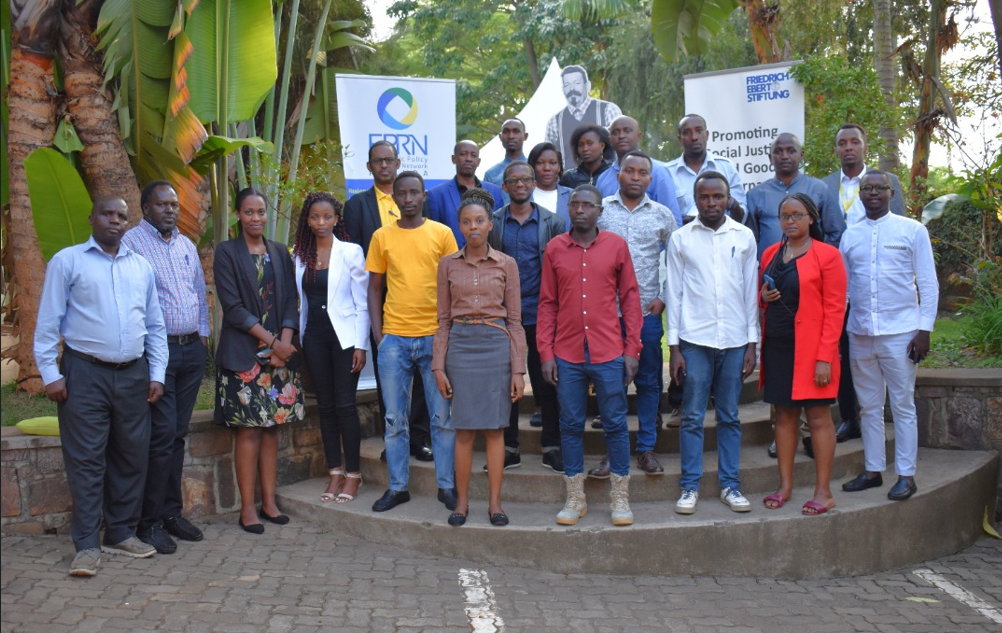
6th Annual General Assembly
Oct 4, 2022 -

-
-
PRESS RELEASE
Jun 10, 2022 -
-