Profile
Rwanda Charts Path for Resilient and Inclusive Growth at 12th EPRN Annual Economic Research Conference
Kigali, June 26, 2026
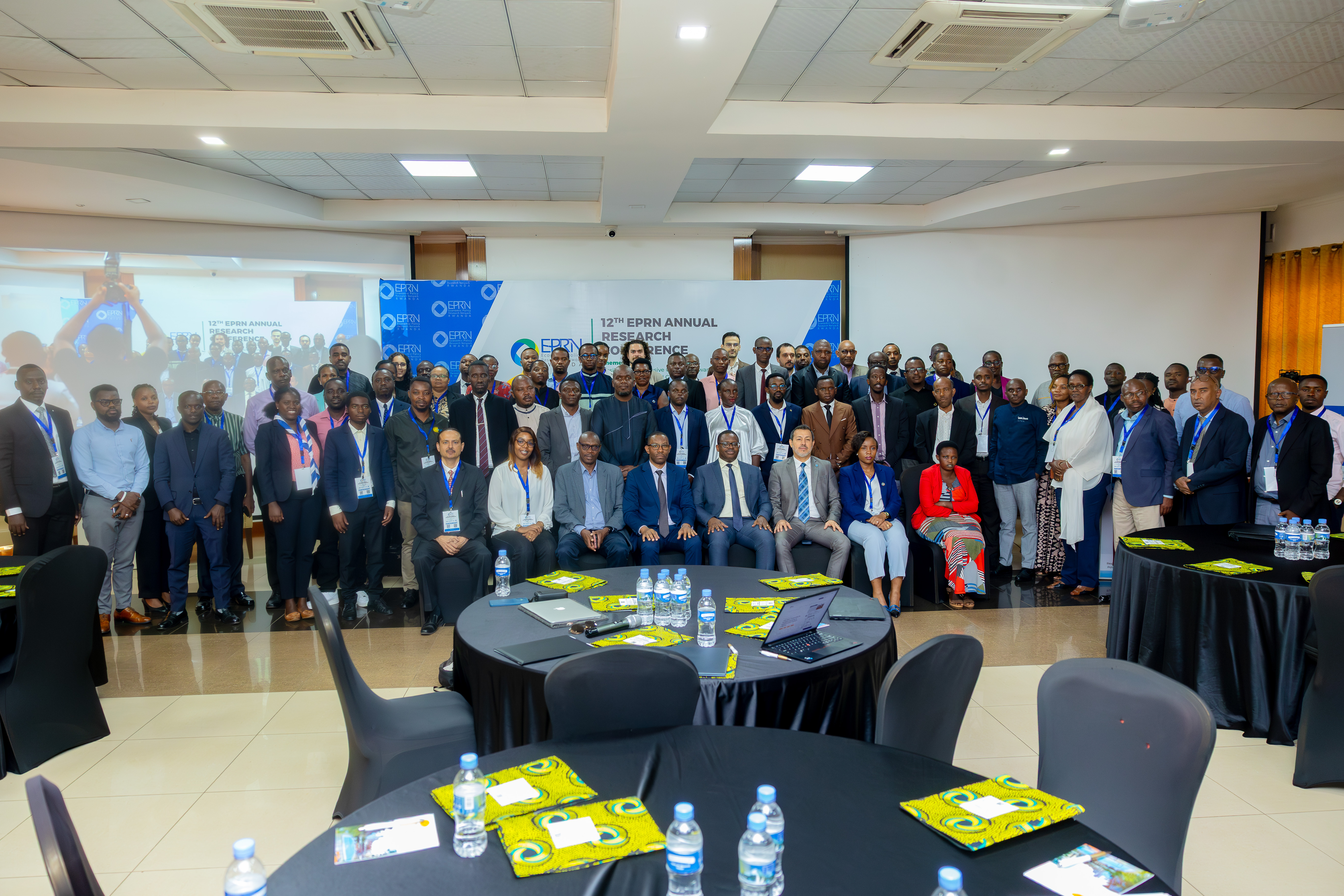
Kigali, June 26, 2026 — The 12th Annual Economic Research Conference, hosted by the Economic Policy Research Network (EPRN) from 25th to 26th June 2026, concluded at Lemigo Hotel after two days of vibrant dialogue, evidence-based presentations, and policy debates. Under the theme “Resilient and Inclusive Growth in Rwanda : Policy Pathways Amid Global Uncertainty”, the gathering brought together about 350 government officials, researchers, development partners, and private sector leaders who participated physically and virtually to deliberate on Rwanda’s economic resilience and inclusive transformation.
Day One Highlights : Agriculture and Fiscal Resilience
The conference opened with remarks from Jean Baptiste Sagahutu, Chairperson of EPRN and Olivier Kamana, Permanent Secretary of MINAGRI, setting the tone for a forward-looking dialogue. Olivier emphasized the urgency of transforming Rwanda’s agrifood systems to withstand climate and market shocks.
Session One focused on agriculture and food systems transformation, with presentations ranging from optimizing public expenditure to embedding traceability in Rwanda’s coffee sector. Speakers such as Marco V. Sanchez (FAO) and Jean Claude Kabano (GAIN) highlighted how data dashboards and value-chain innovations can accelerate resilience. A lively panel moderated by Birasa Nyamulinda (EPRN) explored nutrition-sensitive approaches and alignment with CAADP targets, with Emerence Mukangabo (IFPRI) and Getaw Tadesse (AKADEMIYA2063) stressing evidence-based policy coherence.
The afternoon shifted to tax administration and fiscal space, where David Ntihemuka (RRA) and Giovanni Occhiali (ICTD) presented on VAT compliance and experimental tax advice. Discussions underscored the delicate balance between mobilizing domestic revenue and safeguarding private sector competitiveness. A panel led by Hannah Mareno (RRA), with contributions from the IMF’s Habtamu Fuje, examined how Rwanda can strengthen fiscal resilience amid global financial tightening.
Day Two Highlights : Regional Shocks and Youth Employment
Day Two began with a recap by Seth Kwizera (EPRN), followed by Elena Acebes (UNECA) presenting Eastern Africa’s economic outlook. The session on EAC regional economic status tackled the challenges of high growth under tight budgets and rising uncertainty. Panelists including Judith Nabaasa (MINECOFIN) and Faustin Maniraguha (NBR) debated strategies for fiscal discipline, monetary coordination, and regional trade integration to cushion economies against external shocks.
The final session spotlighted youth employment ecosystems, drawing on findings from the AGUKA Tracer Study (2022–2025). Pierre Kalinda (MOYA) and Nicolas Schmids (UNDP) emphasized the need for inclusive financing and digital skills development. Young entrepreneur Uwineza Shakira shared firsthand challenges of accessing finance and scaling enterprises, calling for stronger support systems. The panel, moderated by Flora Kaitesi (UNDP), underscored entrepreneurship, innovation hubs, and policy reforms as critical levers to harness Rwanda’s demographic dividend.
Key Outcomes and Recommendations
The conference produced actionable recommendations across four pillars :
- Agriculture transformation : There is need to strengthen value chains, reduce postharvest losses, and integrate nutrition into agricultural policy.
- Fiscal resilience : There is need to expand digital tax systems, enhance compliance through transparency, and explore innovative financing instruments such as green bonds.
- Regional integration : There is need to deepen intra-EAC trade, diversify energy sources, and coordinate fiscal and monetary policies to withstand global shocks.
- Youth employment : There is need to invest in future-ready skills, expand access to finance, and foster entrepreneurship ecosystems to empower Rwanda’s youth.
Closing remarks were delivered by Prof. Jean Baptiste Sagahutu, Chairperson of EPRN, who reaffirmed the network’s commitment to translating these insights into policy action and strengthening collaboration among stakeholders.
A Platform for Collaboration
With over 350 participants from Rwanda and abroad, the conference reinforced EPRN’s role as a hub for evidence-based dialogue. It showcased Rwanda’s progress in fiscal reforms, agricultural innovation, and youth empowerment, while highlighting the importance of partnerships across government, academia, civil society, and development partners.
As Rwanda advances toward Vision 2050, the 12th Annual Economic Research Conference underscored that resilience and inclusivity are not abstract ideals but actionable pathways. By harnessing data, innovation, and collaboration, Rwanda is positioning itself to thrive amid global uncertainty.